
Guide 07
Fire and Shelter Guide
Staying Warm and Dry
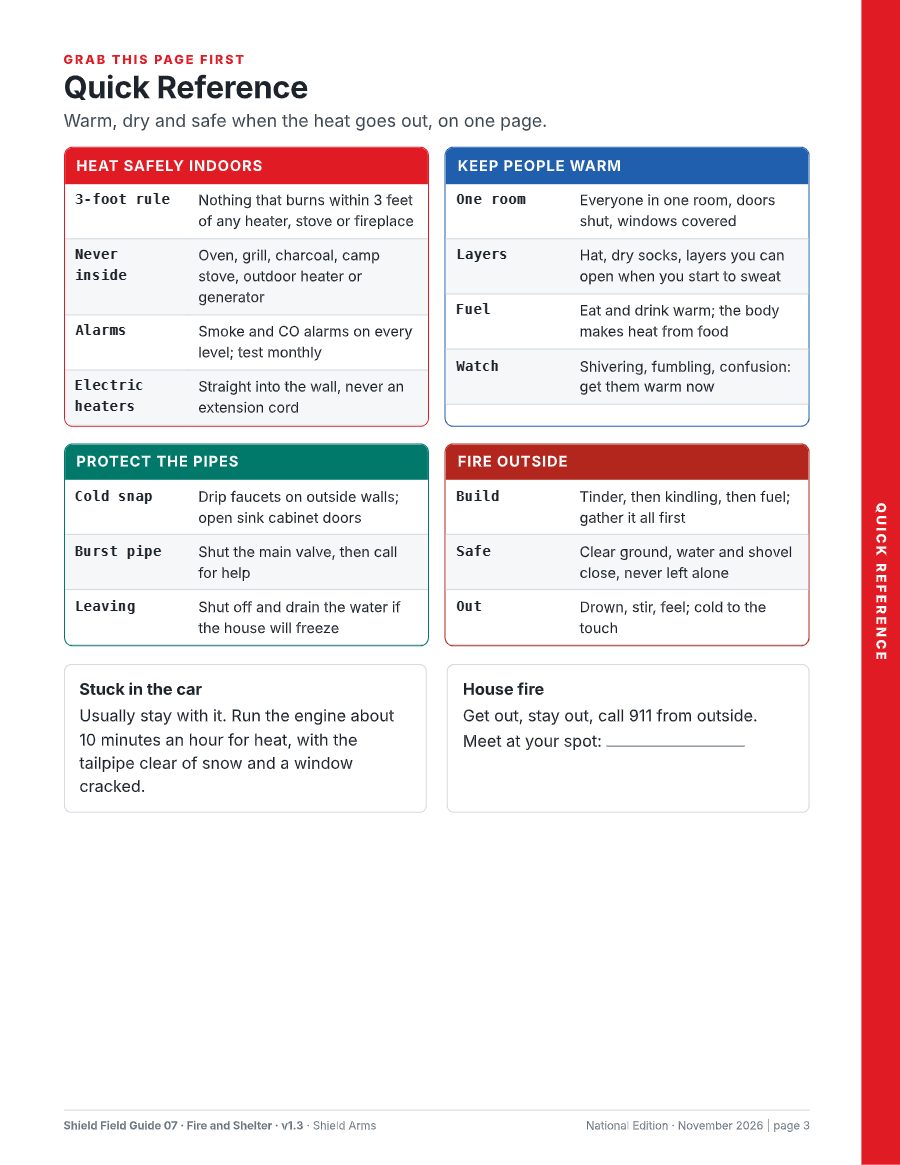
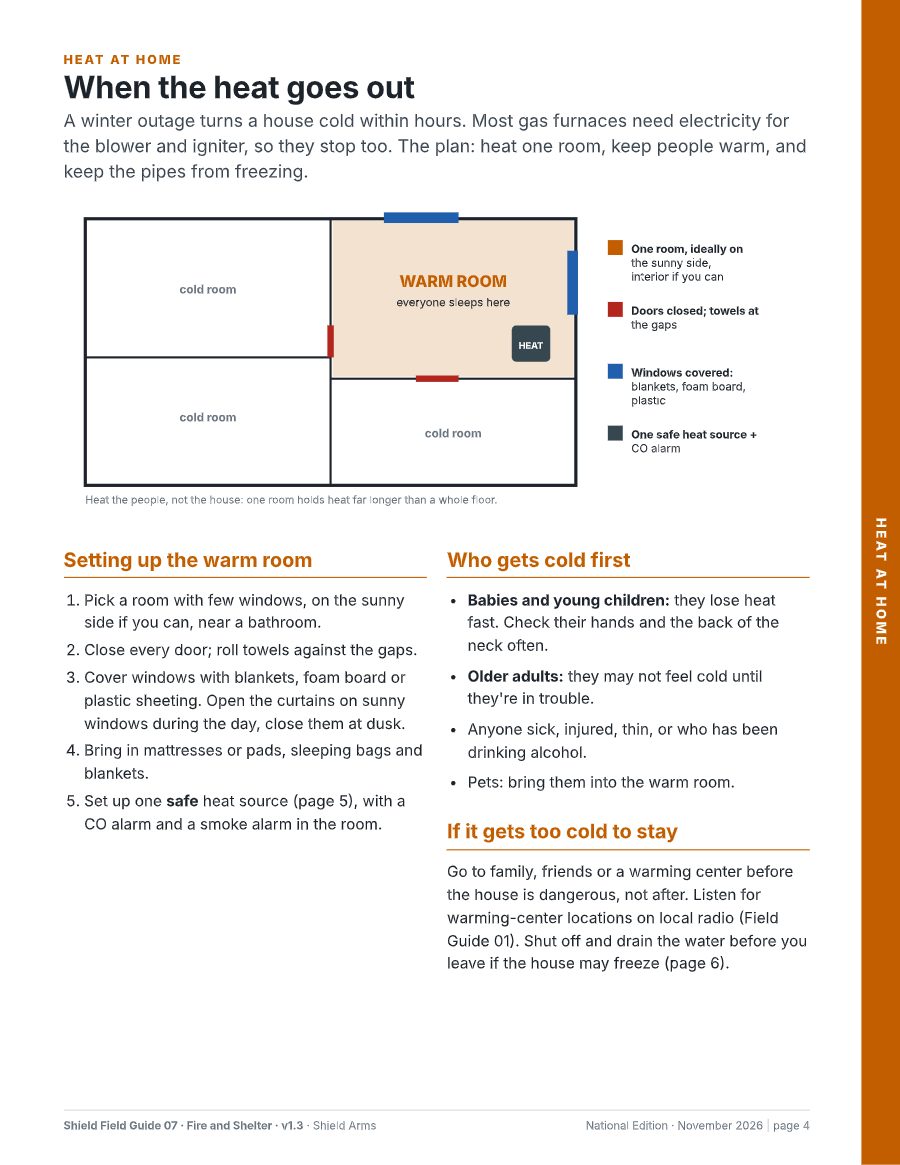
When the heat goes out, move everyone into one room, close the doors, cover the windows and dress in layers. Use one safe heat source with nothing that burns within 3 feet and a carbon monoxide alarm on, and never use an oven, grill, charcoal, camp stove or generator indoors. Drip faucets on outside walls and open sink cabinets so the pipes don’t freeze.
15 pages · Free printable PDF · Version 1.4 · November 2026
Get every guide free
Enter your name and email and the download page opens right away. We'll also email you the links.
Free. Unsubscribe any time. See our privacy policy.
What’s inside
What this guide covers
- A one-page Quick Reference for heat, warmth, pipes and fire
- The warm room, and heating safely indoors
- Protecting pipes and the house in a cold snap
- Keeping people warm: layers, food and sleep
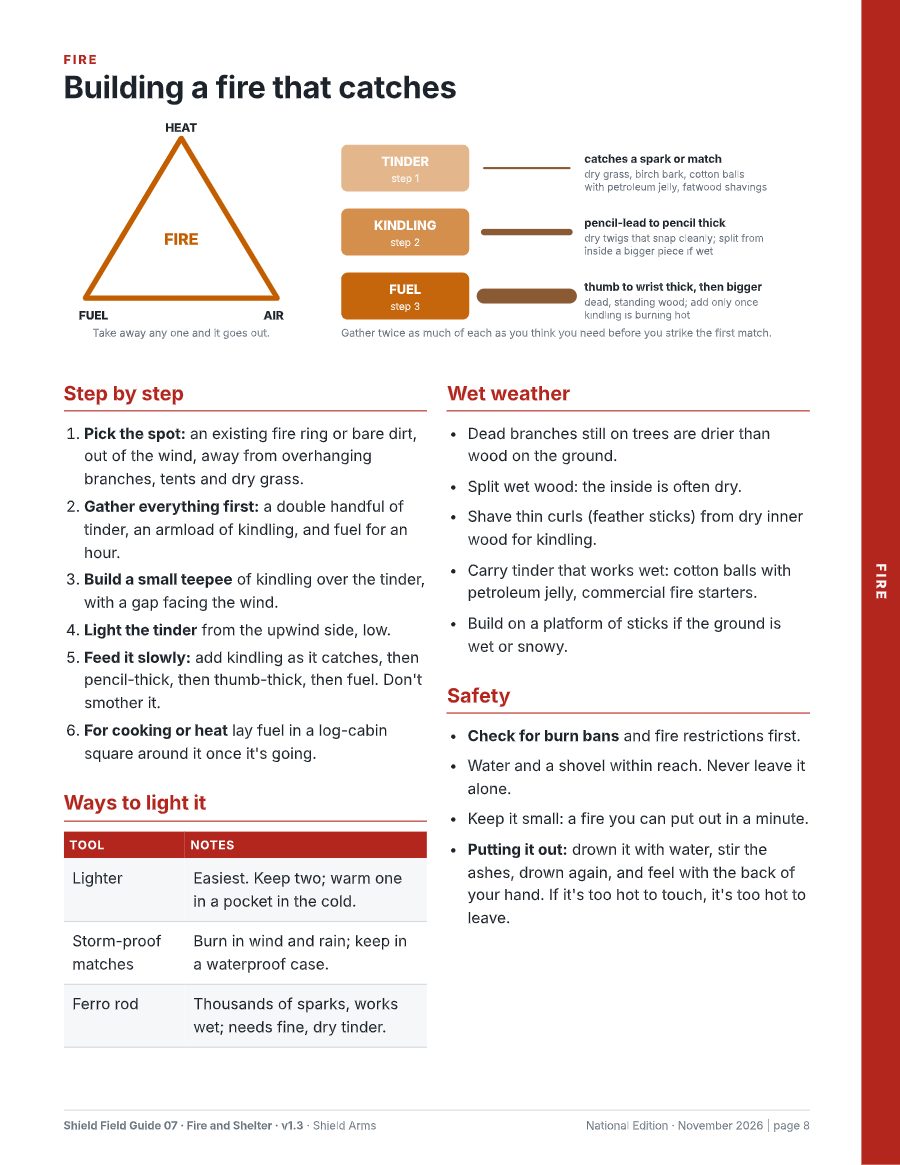
- Building a fire that catches, and when fire is the emergency
- Shelter outside and the car in winter
- A heat plan and fire escape map to fill in
Who it’s for
Anyone who lives where winter can take out the furnace, and anyone who might have to spend a night outside or in a stuck car. Start this week: test every smoke and CO alarm, and pick your warm room.
Sample pages
A look inside
Questions
Frequently asked
Are indoor propane heaters safe?
Some are labeled for indoor use, but many fire services discourage unvented heaters and some local codes limit them. The guide says indoor-rated models only, used exactly as the label says, with a CO alarm.
What if I am stuck in my car in winter?
Usually stay with it. Run the engine about 10 minutes an hour for heat, with the tailpipe clear of snow and a window cracked.
What are the warning signs of getting too cold?
Shivering, fumbling and confusion. When you see them, get that person warm right away.
Field Note: How do you keep a house warm when the power goes out?